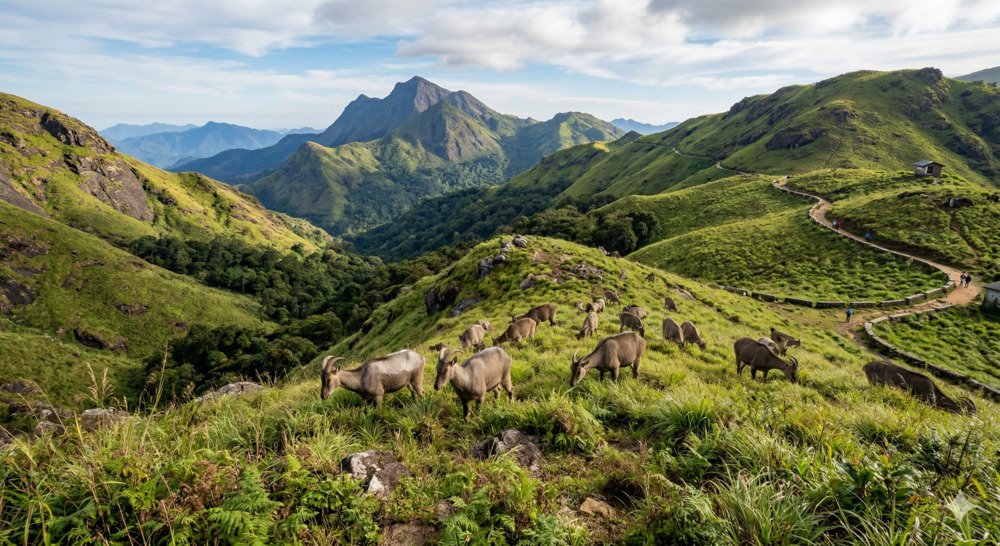
Eravikulam National Park: A Complete Guide to Spotting the Nilgiri Tahr
Munnar, the crown jewel of Kerala’s Western Ghats, is world-renowned for its undulating tea carpets and mist-shrouded peaks. However, for the true nature lover, the heartbeat of this region lies within the protected boundaries of Eravikulam National Park. Spread across 97 square kilometers of high-altitude grasslands and shola forests, this sanctuary is not just a scenic viewpoint; it is a vital ecological stronghold. As the first national park in Kerala, it holds a prestigious position in Kerala wildlife tourism, primarily because it serves as the last great bastion for the endangered Nilgiri Tahr.
Whether you are a professional wildlife photographer or a family on a Munnar travel guide itinerary, a visit to Eravikulam (often referred to locally as Rajamalai National Park) is non-negotiable. In this comprehensive guide, we will explore everything from Eravikulam National Park tickets and Eravikulam National Park timings to the expert secrets of spotting the elusive Tahr amidst the rolling Anamudi hills.
About Eravikulam National Park: The Roof of Kerala
Located approximately 15 kilometers from Munnar town, Eravikulam National Park is a breathtaking expanse of "Shola-Grassland" ecosystem, a unique landscape found only in the higher elevations of the South Indian hills. The park is managed by the Kerala Forest and Wildlife Department and is a candidate for UNESCO World Heritage status due to its immense biodiversity.
The Landscape and Biodiversity
The park is divided into three areas: the Core Area, the Buffer Area, and the Tourism Area. Visitors are permitted into the Rajamalai region (the tourism zone), which offers some of the most spectacular views of the Anamudi Peak—the highest point in South India, standing tall at $2,695$ meters.
While theNilgiri Tahris the undisputed star, the park’s biodiversity is staggering. It is home to:
- Mammals: Gaur, Indian Muntjac, Sambar Deer, Golden Jackal, and the rare Nilgiri Marten.
- Birds: Over 130 species, including endemics like the Black-and-orange Flycatcher and the Nilgiri Pipit.
- Flora: The park is famous for the Neelakurinji (Strobilanthes kunthiana), the shrub that blankets the hills in blue once every 12 years.
Nilgiri Tahr – The Star Attraction of Munnar
To understand the importance of this Munnar National Park, one must understand the Nilgiri Tahr (Nilgiritragus hylocrius). This sturdy, mountain goat-like ungulate is endemic to the Western Ghats. Once roaming widely across the range, habitat loss and poaching reduced their numbers drastically, leading to their "Endangered" status on the IUCN Red List.
Characteristics and Behaviour
The Nilgiri Tahr is known for its short, coarse fur and curved horns. Adult males, known as "Saddlebacks," develop a distinct light grey patch on their backs as they age. They are incredibly agile, capable of navigating near-vertical rock faces with ease—a necessary skill to evade predators like leopards or tigers.
The Eravikulam Success Story
Today, Eravikulam National Park hosts the largest surviving population of Nilgiri Tahrin the world. Unlike other wildlife sanctuaries where animals are shy, the Tahr in the Rajamalai tourism zone have become somewhat accustomed to human presence, often grazing peacefully just a few meters from the walking paths. This makes Eravikulam the best place to see Nilgiri Tahr in Munnar.
Best Time to Visit Eravikulam National Park
Timing is everything when planning a trip to a high-altitude sanctuary. The weather in Munnar can be unpredictable, significantly affecting visibility.
1. Winter (September to January) - Peak Season
This is the best time to visit Eravikulam National Park. The air is crisp, the skies are generally clear, and the Nilgiri Tahr are frequently seen grazing in the emerald-green grasslands. The cool temperatures make the uphill walk in Rajamalai pleasant.
2. Summer (April to May)
While the rest of India swelters, Munnar remains cool. This is a popular time for family travellers. However, the grass may turn slightly brown, and the Tahr might move to deeper valleys in search of water during the peak afternoon heat.
3. Monsoon (June to August)
Kerala's monsoons are legendary. While the park looks ethereal in the mist, heavy rains can make the paths slippery. Visibility is often zero due to dense fog, which makes spotting wildlife difficult.
Important: Annual Closure (February to March)
Every year, the park typically closes for 30 to 60 days during the calving season of theNilgiri Tahr. This is a critical time for the endangered species, and the closure ensures the newborns are not disturbed. Always check the official Eravikulam National Park status before booking your trip during these months.
How to Reach Eravikulam National Park
The park is easily accessible from Munnar, making it one of the top things to do in Munnar.
From Munnar Town: The entrance is roughly 15 km away. You can easily book a Munnar taxi service or take a local bus toward Udumalpet.
From Kochi (Cochin International Airport): The airport is approximately 120 km away. The drive takes about 4 hours via the NH85, offering a beautiful Road Trip from Kochi experience.
From Coimbatore: If you are coming from Tamil Nadu, the park is about 150 km away via Pollachi and Marayoor.
Entry Details: Tickets, Timings & Booking
To manage the ecological impact, the forest department has a strict entry system.
Eravikulam National Park Timings
- Opening Hours: 7:30 AM to 4:00 PM (Daily).
- Duration: Expect to spend at least 2 to 3 hours here.
Eravikulam National Park Tickets & Entry Fee
- Indian Adults: ₹200 (approx.)
- Children: ₹150
- Foreign Nationals: ₹600
- Photography: Extra charges for professional cameras.
The Online Booking Process
To avoid long queues (which can last 2-3 hours during peak season), it is highly recommended to use the Eravikulam National Park online booking facility via the official Kerala Forest Department website. There is a daily cap on the number of visitors, so booking in advance is essential.
The Shuttle Bus System
Private vehicles are not allowed inside the park. After purchasing your ticket at the entrance gate, you will board a forest department shuttle bus. This bus takes you on a winding 5 km drive up the hill to the Rajamalai drop-off point. From there, visitors must walk approximately 1-2 km uphill on a paved road to reach the highest accessible viewpoint.
How to Spot Nilgiri Tahr: Expert Tips
Many visitors walk the path and leave without a sighting because they don't know where to look. Here is how to maximize your chances:
1. Go Early: The best time to see Nilgiri Tahr in Munnar is during the first shuttle bus at 7:30 AM. The animals are most active during the cooler morning hours before the crowds arrive.
2. Scan the Cliffs: Don't just look at the road. Look at the rocky "slabs" and cliffs above the path. The Tahr often rest on these rocky outcrops to soak up the morning sun.
3. Watch the Mist: If a sudden mist rolls in, stay quiet. As the mist clears, you might find a Tahr grazing just a few feet away from you.
4. Listen for the "Whistle": Nilgiri Tahr have a distinct alarm call that sounds like a shrill whistle. If you hear it, it means they are nearby and likely alert to a predator or another group.
5. Photography Tip: Use a telephoto lens (200mm or above) to capture their expressive eyes and curved horns without encroaching on their space. The light in Rajamalai is soft in the morning, perfect for wildlife photography.
Things to Do in Eravikulam National Park
While the Tahr is the focus, the park offers more:
- Rajamalai Trekking Experience: While the "trek" is on a paved road, the steep incline provides a good workout and breathtaking views of the tea estates below.
- Visit the Interpretation Center: Located near the bus drop-off point, this small museum provides deep insights into the Nilgiri Tahrhabitat and the park’s history.
- View Anamudi Peak: From the highest point of the tourism zone, you can get a clear view of the Anamudi summit, often poking through the clouds.
- Witness the Neelakurinji: If you are lucky enough to visit during a bloom year (the last was 2018, next is 2030), the entire park transforms into a purple paradise.
Travel Tips for a Smooth Visit
- What to Wear: Wear comfortable walking shoes with good grip. Layer your clothing; it can be very chilly in the morning but warm once the sun is out.
- Plastic-Free Zone: Eravikulam is a strictly "No Plastic" zone. Do not carry plastic bags or disposable water bottles. Use reusable containers.
- No Smoking/Alcohol: Strictly prohibited and punishable by law.
- Maintain Silence: Loud noises scare away the wildlife. Respect the habitat.
- Stay on the Path: For your safety and the protection of the flora, never stray from the paved road into the grasslands.
Nearby Attractions in Munnar
Make the most of your day by visiting these Munnar tourist places located near the park:
1. Lakkam Waterfalls: Located on the way to Marayoor, these falls are fed by the Eravikulam stream.
2. Tea Gardens: The drive to the park entrance takes you through some of the most scenic tea plantations in the world.
3. Marayoor: Famous for its natural sandalwood forests and "Muniyaras" (ancient dolmens).
Suggested 1-Day "Wild Munnar" Itinerary
- 07:00 AM: Leave Munnar town for Eravikulam National Park.
- 07:30 AM: Board the first shuttle bus to Rajamalai.
- 10:30 AM: Finish the park visit and head towards Marayoor.
- 12:30 PM: Explore the Sandalwood forests and have a traditional Kerala lunch.
- 02:30 PM: Visit the Lakkam Waterfalls for a refreshing break.
- 04:30 PM: Return to Munnar, stopping at the Tea Gardens for sunset photos.
Why Eravikulam is a Must-Visit
Eravikulam National Park is more than just a tourist spot; it is a testament to successful Kerala wildlife tourism and conservation. Standing on the slopes of Rajamalai, with the wind howling through the grass and an endangered Nilgiri Tahr grazing peacefully nearby, you feel a profound connection to the natural world. It is the only place where you can experience the high-altitude "Alps of India" with such ease.
A trip to Munnar is incomplete without witnessing the majesty of the Nilgiri Tahr in its natural home. From the thrilling bus ride up the mountain to the serene views from the top of the Rajamalai hills, Eravikulam National Park offers an experience that stays with you long after you’ve left the mist behind.
Ready to plan your Munnar adventure? Remember to book your Eravikulam National Park tickets in advance and prepare for a date with the clouds!
FAQ: Eravikulam National Park Essentials
1. Is Eravikulam National Park open today?
The park is open year-round except during the calving season (usually February to March). It is always best to check the official website for daily updates or local news.
2. How much time is needed for Eravikulam National Park?
Typically, 3 hours are sufficient. This includes the shuttle bus journey (30 mins round trip), the walk up the hill, and time for photography.
3. Can we take our own car inside Rajamalai?
No, private vehicles are strictly prohibited beyond the entrance gate. You must use the forest department's shuttle buses.
4. Are there restrooms and food stalls inside the park?
There are basic restroom facilities and a small snack counter near the bus drop-off point, but options are limited. It is better to eat before you arrive.
5. Is the park accessible for elderly visitors?
The bus takes you to a significant height, but the final viewpoint requires a 1.5 km uphill walk on a paved road. It may be strenuous for those with mobility issues, though there are benches along the way.
0 Comments
Post Comment