Nilgiri Tahr - The Pride of the Western Ghats
The Nilgiri Tahr (Nilgiritragus hylocrius) is one of the most remarkable wild animals found in the Western Ghats of South India. Endemic to the Nilgiri Hills and the southern Western Ghats, this majestic mountain goat is a symbol of the fragile high-altitude ecosystems of Kerala and Tamil Nadu. Locally known as “Varayadu” in Malayalam, meaning “cliff goat,” the Nilgiri Tahr is specially adapted to life on steep rocky slopes and montane grasslands.
Often referred to as the Nilgiri Ibex, the Nilgiri Tahr is the state animal of Tamil Nadu and one of the most iconic wildlife species of the Munnar region. Its presence in Eravikulam National Park has made Munnar one of the best places in India to observe this rare species in its natural habitat.
Taxonomy and Evolutionary Background
The Nilgiri Tahr belongs to the family Bovidae and the subfamily Caprinae, which includes goats and sheep. Its closest relatives are wild sheep of the genus Ovis, although it is distinct from other tahr species such as the Himalayan Tahr (Hemitragus jemlahicus) and the Arabian Tahr (Arabitragus jayakari).
The species evolved uniquely in the isolated montane ecosystems of the Western Ghats, making it a true endemic species. Its scientific name, Nilgiritragus hylocrius, reflects its association with forested mountain habitats.
Physical Characteristics
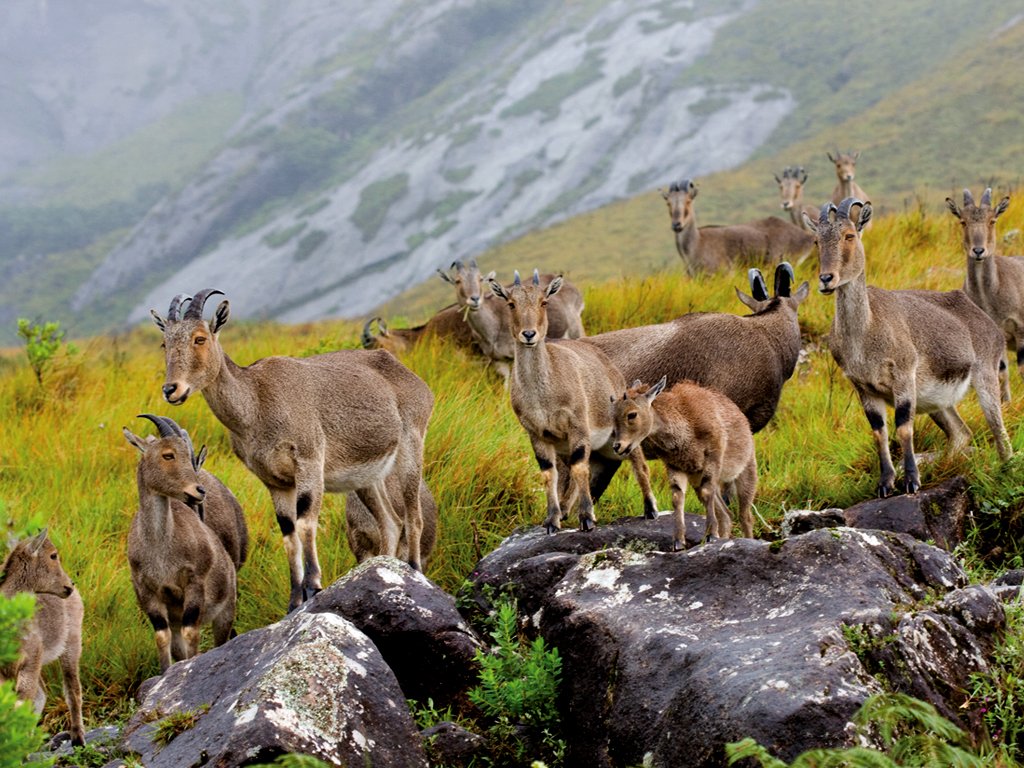
Nilgiri Tahrs are robust, stocky animals with short, coarse fur and a characteristic bristly mane.
Key Features: Size and Weight:
- Adult males: 80–100 kg, about 100 cm tall at the shoulder
- Adult females: Around 50 kg, about 80 cm tall
Horns:
- Both sexes have curved horns
- Males: up to 40 cm
- Females: up to 30 cm, slimmer and shorter
Colouration:
- Mature males develop a distinctive light grey “saddle” patch on their backs, earning them the name “saddlebacks.”
- Females and juveniles are yellowish-brown to grey with paler underparts.
Facial Markings:
- Mature males display striking facial patterns with dark muzzles and white stripes near the horns.
These adaptations help the Nilgiri Tahr survive harsh mountain climates and navigate steep cliffs with remarkable agility.
Habitat and Distribution
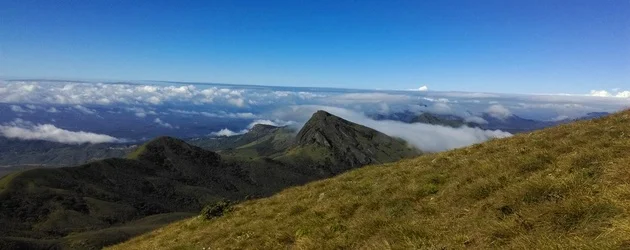
Nilgiri Tahrs inhabit the montane grasslands and shola forests of the Western Ghats at elevations ranging from 1,200 to 2,600 metres above sea level.
Major Habitats:
- Eravikulam National Park (Munnar) – largest population
- Nilgiri Hills (Tamil Nadu)
- Anamalai Hills
- Palani Hills
- Periyar Tiger Reserve
- Smaller pockets across the southern Western Ghats
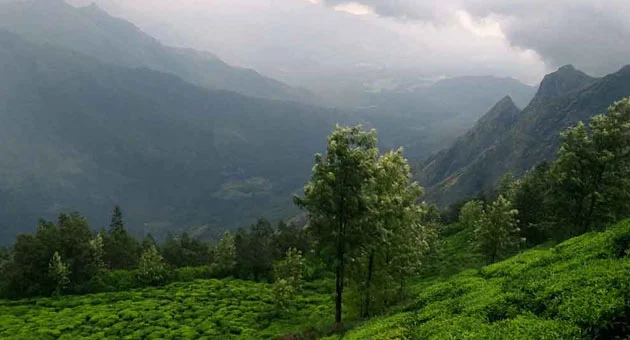
These ecosystems consist of rolling grasslands interspersed with patches of stunted evergreen forests known as “sholas.” The steep rocky cliffs provide natural protection from predators and human disturbance.
Historically, Nilgiri Tahrs roamed across vast stretches of the Western Ghats in large herds. However, hunting, habitat destruction, and human encroachment drastically reduced their numbers during the 19th and early 20th centuries.
Population Status
By the early 20th century, the Nilgiri Tahr population had declined to fewer than 100 individuals. Conservation efforts over the past century have helped the species recover gradually.
- Estimated population today: 2,000–3,000 individuals
- Core populations concentrated in a few high-altitude landscapes
- Distribution limited to about six to seven major habitats
Despite recovery, the species remains vulnerable due to its restricted habitat range and ongoing environmental pressures.
Behaviour and Social Structure
Nilgiri Tahrs are social animals that live in herds, typically consisting of females and young individuals. Adult males often live alone or form small bachelor groups, joining female herds during the breeding season.
Nilgiri Tahrs are herbivores and feed primarily on:
- Grasses
- Shrubs
- Herbs
- Leaves of alpine plants
Their grazing habits play an important role in maintaining the ecological balance of montane grasslands.
Breeding and Life Cycle
The breeding season of the Nilgiri Tahr usually occurs during the monsoon months from June to August.
Reproductive Cycle:
- Gestation period: About 6 months
- Peak birth season: January–February
- Newborn: Called a “kid”
- Weaning: 4–6 months
- Sexual maturity: Around 16 months
The average lifespan of a Nilgiri Tahr in the wild is about 9–12 years, although survival rates are lower due to natural and environmental challenges.
Ecological Importance
The Nilgiri Tahr is a flagship species of the Western Ghats, one of the world’s biodiversity hotspots. Its presence indicates the health of montane ecosystems.
Ecological Roles:
- Maintains grassland vegetation balance
- Supports predator species like leopards and wild dogs
- Acts as an indicator of ecosystem stability
Protecting the Nilgiri Tahr also helps conserve numerous other species that share its habitat.
Threats to Survival
Despite conservation successes, the Nilgiri Tahr faces several threats:
1. Habitat Loss
Expansion of tea plantations, agriculture, and infrastructure has reduced natural grasslands.
2. Fragmentation of Ecosystems
Roads, dams, and settlements have divided habitats into isolated patches.
3. Climate Change
Changing rainfall patterns and rising temperatures threaten fragile high-altitude ecosystems.
4. Human Disturbance
Tourism pressure and illegal grazing disrupt natural habitats.
5. Poaching (Historical and Occasional)
Although now rare, hunting played a major role in past population decline.
Conservation Status
The Nilgiri Tahr is classified as:
- Endangered by the IUCN Red List
- Schedule I species under the Indian Wildlife (Protection) Act, 1972
This provides the highest level of legal protection in India.
Conservation Efforts
Over the decades, several initiatives have helped protect the Nilgiri Tahr:
Protected Areas
- Eravikulam National Park
- Nilgiri Biosphere Reserve
- Anamalai Tiger Reserve
- Periyar Tiger Reserve
Scientific Research
Population monitoring, habitat mapping, and ecological studies have improved conservation planning.
Community Participation
Involving local communities in wildlife protection has reduced conflicts and illegal activities.
Habitat Restoration
Efforts are underway to restore degraded grasslands and prevent invasive species from spreading.
Future Strategies
- Strengthening wildlife corridors
- Expanding protected areas
- Promoting responsible tourism
- Long-term habitat sustainability programs
Nilgiri Tahr and Munnar Tourism
Munnar is one of the best destinations in India to observe the Nilgiri Tahr in the wild. Visitors to Eravikulam National Park often spot herds grazing on rolling grasslands, especially near Rajamalai.
The Nilgiri Tahr has become a symbol of Munnar’s natural heritage and an important attraction for eco-tourism and wildlife enthusiasts.
A Symbol of Mountain Wilderness
The Nilgiri Tahr is more than just a wild animal—it is a living symbol of the Western Ghats’ rich biodiversity and ecological resilience. From the mist-covered cliffs of Munnar to the rugged hills of the Nilgiris, this majestic mountain goat continues to inspire conservation efforts and nature lovers alike.
Preserving the Nilgiri Tahr means protecting the fragile ecosystems of the Western Ghats for future generations. As Munnar continues to grow as a global tourist destination, sustainable tourism and conservation will play a crucial role in ensuring that the Nilgiri Tahr remains a thriving part of Kerala’s natural heritage.