Waterfalls of Munnar: Chasing Attukad, Lakkam, Cheeyappara, and Beyond
The Ultimate Expert Travel Guide to the Most Majestic Cascades in Kerala's Western Ghats
1. Introduction: The Liquid Magic of Munnar
Munnar, perched at an altitude of 1,600 metres above sea level in the Western Ghats of Kerala, is widely celebrated for its rolling emerald tea estates, blankets of mist, and pleasant high-altitude climate. Yet, beneath the serene landscape of manicured plantations lies a dramatic, wild network of aquatic highways. Fed by perennial mountain springs, heavy monsoon downpours, and dense shola forest reserves, the waterfalls of Munnar represent the untamed, pulsating heart of Idukki district. For travellers seeking a cool sanctuary from the scorching tropical summer, these cascades offer more than just a visual spectacle—they provide a multi-sensory escape marked by the thunderous roar of rushing water, the cool embrace of mountain spray, and the invigorating scent of wild moss and eucalyptus.
Chasing waterfalls in Munnar is a ritual of exploration. As you navigate the winding, hairpin-curved highways that cut through the mountains, these liquid ribbons reveal themselves suddenly—sometimes emerging as roaring walls of white foam right beside the road, and at other times tucked deep within treacherous, rocky valleys accessible only by foot. This comprehensive travel guide is curated by local experts to take you on an exhaustive journey through Munnar’s iconic, popular, and well-hidden waterfalls, detailing everything from optimal visiting times and seasonal behaviors to logistical planning and safety precautions. Whether you are an adventure seeker, an avid photographer, or a family planner curating a summer holiday, this guide will serve as your blueprint for an unforgettable itinerary.
During the height of the monsoon, many mountain cascades become dangerously volatile; flash floods, landslides, slippery rock faces, and thick, impassable mists frequently force local authorities to shut down access to popular viewpoints. Furthermore, the extreme water volume turns pristine pools into muddy, violent torrents where swimming or wading is strictly prohibited.
In contrast, the summer season softens these wild torrents into crystal-clear, elegant streams that settle into tranquil natural rock pools at their bases. The water temperatures remain remarkably chilly, providing an ideal respite from the hot plains of mainland India. The surrounding trails dried out by the sun become safe and accessible for trekkers and families alike. The visibility is flawless, giving photographers crisp, unhindered long-exposure opportunities against the vivid blue skies and lush green mountain backdrops. For anyone planning a summer retreat to Munnar, incorporating a waterfall safari provides the ultimate refreshing contrast to afternoon sightseeing.
2. The Iconic Cascades: An In-Depth Profile
Attukad Waterfall: The Dramatic Abyss
- Location: 9 km from Munnar Town, along Pallivasal Road
- Best Time: June to January (Stunning even in late Spring)
- Activity: Photography, light trekking, viewpoint sightseeing
Attukad is arguably Munnar's most dramatic waterfall, characterized by its multi-tiered drop through a steep, amphitheater-like rocky gorge surrounded by dense jungle and expansive tea slopes. The journey to Attukad is an adventure in itself; visitors must traverse a narrow, old wooden bridge that spans across the river bed, offering a breath taking, head-on look at the roaring waters as they plummet into the deep pool below.
During the dry summer months, Attukad's multiple tiers become beautifully distinct, exposing ancient, water-smoothed black granite structures that are hidden during peak monsoons. The air here remains notably cooler due to the microclimate created by the deep valley. A small tea stall located near the primary viewpoint allows travellers to sip hot, locally brewed cardamom tea while absorbing the mist rising from the gorge. Hiking down closer to the base is possible via rough trails, but it requires sturdy, high-traction footwear due to loose gravel.
Pro Tip: The road to Attukad is exceptionally narrow and can experience traffic bottlenecks. Hire an auto-rickshaw from Munnar town or walk the last kilometer to enjoy the panoramic views without driving stress.
Lakkam Waterfall: The Crystal Clear Oasis
- Location: 24 km from Munnar town, en route to Marayoor
- Best Time: Year-round accessibility
- Activity: Safe wading, stream walking, eco-tourism walks
Managed efficiently by the Kerala Forest Department under the Eravikulam National Park eco-tourism initiative, Lakkam Waterfall is a must-visit destination for families and solo travellers alike. Situated on the highway connecting Munnar to Udumalpet, Lakkam is fed by the Eravikulam stream, meaning its waters are incredibly pure, cool, and free from agricultural runoff. The waterfall cascades gracefully down a smooth rocky slope, collecting into a wide, shallow, and remarkably clear pool at the bottom.
Unlike other wild waterfalls in the region, Lakkam features a well-maintained, clean eco-shop, wooden walkways, and changing rooms, making it the premier location for visitors who wish to dip their feet or safely wade into the mountain water. Small fish populate the shallow margins, offering a natural, gentle "fish spa" experience to those sitting quietly on the boulders. The surrounding forest area is flanked by old, towering trees, providing ample shade even during peak noon summer hours.
Cheeyappara Waterfall: The Highway Showstopper
- Location: 42 km from Munnar, on the Kochi-Madurai Highway (NH 85)
- Best Time: June to February
- Activity: Roadside pitstop, panoramic photography, local spice shopping
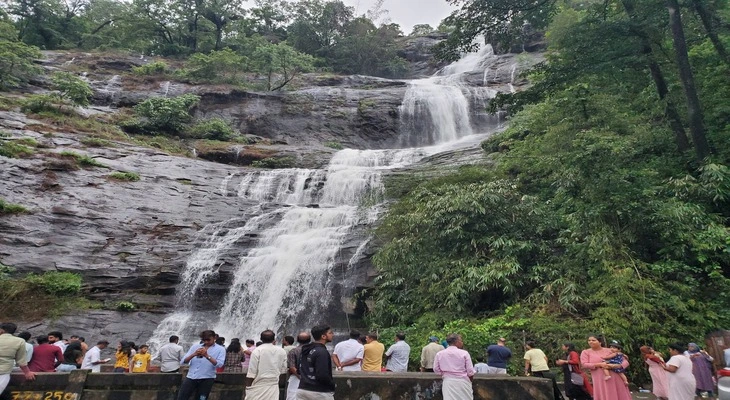
For anyone driving up to Munnar from Cochin International Airport or Ernakulam railway station, Cheeyappara Waterfall acts as the grand, ceremonial gateway to the hill station. This massive cascade thunders down seven distinct rock terraces right alongside the National Highway, making it impossible to miss. The sheer vertical scale of Cheeyappara is mesmerizing, as thousands of gallons of water crash down the stepped rock face, creating a perpetual curtain of fine mist that cools the road.
Because it requires no trekking or off-road navigation, Cheeyappara is a bustling hive of activity. The area surrounding the base is packed with local vendors selling fresh, sliced tropical fruits seasoned with salt and chili, hot Kerala snacks like banana fritters, and locally sourced spices. It serves as an excellent spot to rest your vehicle, stretch your legs, and capture iconic landscape photographs against the massive backdrop of the tiered falls.
Chinnakkanal Waterfall: The Powerhouse of Suryanelli
- Location: 20 km from Munnar town, near Devikulam
- Best Time: Post-monsoon through Spring
- Activity: Scenic viewing, photography, plantation tours
Also popularly referred to as the 'Power House Waterfall,' Chinnakkanal is steeped in local folklore and natural beauty. According to regional legends, the great sage Agastya used to bathe in the pool at the top of this cascade, adding a spiritual allure to its geographic splendour. The water originates from the high-altitude hills of Devikulam and thunders down a sheer, jagged cliff face reaching heights of nearly 2,000 meters above sea level.
The view from the main road opposite Chinnakkanal is panoramic, framed perfectly by steep, manicured tea estates on one side and a deep forest valley on the other. The intense force with which the water strikes the boulders at the base generates a loud, rhythmic roar that echoes throughout the valley. While entering the pool directly is highly discouraged due to hidden undercurrents and sharp rock fractures, the roadside observation platform offers an unparalleled vantage point for viewing this natural marvel.
3. Exploring Hidden Gems and Surrounding Cascades
Valara Waterfall: The Wild Companion
Located just a few kilometres past Cheeyappara on the Kochi-Munnar highway, Valara Waterfall is often spoken of in the same breath as its neighbour, yet it possesses a completely distinct character. Valara is set back further into a dense, virgin jungle tract, cascading down a steep cliff wrapped in thick green canopy. The waterfall is massive and powerful, visible from several bends along the highway. Because it is surrounded by protected forest lands, access to the immediate base is restricted, ensuring that the surrounding ecosystem remains completely untouched and pristine. It is a haven for birdwatchers, who can often spot predatory raptors, hornbills, and mountain pigeons gliding across the forested valley in front of the falls.
Nyayamakad Waterfall: The High-Altitude Giant
Situated roughly 10 kilometers from Munnar town on the way to the Rajamala tourism zone, Nyayamakad is one of the highest waterfalls in the entire district, plunging from a staggering height of roughly 1,600 meters. The waters originate deep within the high-altitude grasslands of the Eravikulam National Park and travel through rocky channels before making a dramatic leap down a massive cliff. The area surrounding Nyayamakad is breathtakingly beautiful, characterized by steep, lush green slopes, tea pickers working diligently in the distance, and panoramic views of the entire Anamudi mountain range. It is an exceptional spot for landscape painters and serious travel photographers seeking to capture the grand scale of the Western Ghats.
Kuthumkal Waterfall: The Hidden Rushing Stream
For those willing to venture slightly further off the beaten path, Kuthumkal Waterfall, located near Rajakkad (about 28 km from Munnar), and offers an immersive, off-beat experience. What makes Kuthumkal unique is its structure—rather than a single high vertical drop, the water rushes violently over a long series of large, sloping boulders, creating a continuous, high-speed rapid effect. The immense velocity of the water creates a thick, milky white froth that blankets the entire stream. The misty spray generated here is so intense that it dampens the air for several hundred meters around, providing an incredibly refreshing, air-conditioned feel even on the hottest summer afternoon.
4. Practical Itinerary Planning for a Waterfall Safari
To maximize your time and ensure a smooth travel experience, it is highly recommended to group your waterfall visits geographically rather than driving back and forth across the mountainous terrain. Below is a highly optimized, two-day itinerary designed to minimize travel time and maximize your exploration?
Day 1: The Western Route (The Cochin Highway Circuit)
- 08:30 AM – Cheeyappara Waterfall: Catch the falls in the crisp morning light as you travel up the mountain. Enjoy a breakfast of fresh fruits and local tea by the roadside.
- 10:00 AM – Valara Waterfall: Stop at the designated valley viewpoint just 5 minutes ahead of Cheeyappara to admire the deep jungle cascades.
- 01:30 PM – Attukad Waterfall: After checking into your Munnar resort and having lunch, head straight to Attukad. Spend your afternoon enjoying the deep valley views and the rocky hiking trails as the sun begins to dip.
Day 2: The Northern & Eastern Reserves
- 09:00 AM – Lakkam Waterfall: Head north toward Marayoor. Arrive early to enjoy the calm, undisturbed waters of Lakkam before the midday crowds arrive. Spend an hour wading safely in the pristine eco-zone pool.
- 01:00 PM – Nyayamakad Waterfall: Stop here on your return journey from Rajamala. The midday sun illuminates the deep rocky gorge perfectly for photography.
- 04:00 PM – Chinnakkanal Waterfall: Drive toward the Suryanelli zone to catch the late afternoon mist enveloping the Power House falls, concluding your tour with a stunning view of the surrounding tea estates.
5. Essential Travel and Safety Tips for Visitors
When exploring natural water bodies in a mountainous terrain like Munnar, safety and preparedness should always remain your top priorities. Following these basic guidelines will ensure your trip remains memorable for all the right reasons:
1. Footwear is Key: The rocks surrounding Munnar’s waterfalls are covered in slick moss and micro-algae that are incredibly deceptive. Always wear sturdy, closed-toe hiking shoes or specialized water sandals with deep rubber treading. Avoid flip-flops, smooth-soled shoes, or high heels entirely.
2. Heed Warning Signs and Local Guards: Many waterfalls, such as Chinnakkanal and Cheeyappara, have strict boundary walls or warning signs put up by the Kerala Tourism Development Corporation (KTDC) and the Forest Department. Never breach these barriers for selfies or close-up views. Hidden vortexes, sudden drops, and underwater rock crevices can be fatal.
3. Check Weather Forecasts: Even during summer, high-altitude hill stations can experience sudden, localized cloudbursts. If you notice the water suddenly turning muddy or the volume increasing abruptly, exit the riverbed or pool immediately, as these are primary indicators of an oncoming upstream flash flood.
4. Pack Smart: Bring a waterproof dry-bag to protect your electronic items, smartphones, and camera gear from the heavy, pervasive mist. Always carry an extra change of clothes, a quick-dry microfiber towel, and eco-friendly mosquito repellent, especially when entering forested zones like Lakkam or Valara.
5. Practice Responsible Tourism: The water originating from these falls supplies local wildlife and down-stream villages. Do not litter plastic bottles, wrappers, or personal items. Refrain from using chemical soaps, shampoos, or sunscreens directly inside the natural rock pools.
6. Frequently Asked Questions (FAQs)
Q1: Which is the best waterfall in Munnar for bathing or swimming safely?
Lakkam Waterfall is widely considered the safest and cleanest spot for wading and dipping your feet. It is managed by the Forest Department, features clear mountain water free from agricultural runoff, and provides designated changing rooms for visitors. Always follow instructions from on-site guards.
Q2: Are Munnar's waterfalls active during the summer months (March to May)?
Yes, major waterfalls like Attukad, Lakkam, Cheeyappara, and Chinnakkanal are perennial, meaning they flow year-round. While the water volume is lower in summer compared to the monsoon season, the water is crystal clear, pools are calmer, and the trails are far safer for families to explore.
Q3: Do I need to pay any entry fees or obtain permits to visit these waterfalls?
Roadside waterfalls like Cheeyappara, Valara, and Chinnakkanal are completely free to view from the highway. However, eco-tourism sites like Lakkam Waterfall require a nominal entry fee (typically INR 20–50 per person) collected by the local Forest Development Agency to maintain cleanliness and amenities.
Q4: Can we visit Attukad Waterfall by a large traveller vehicle or bus?
The road leading from the main highway to the Attukad viewpoint is highly narrow, steep, and winding. Large luxury buses or travellers often struggle to navigate the curves and can cause traffic jams. It is highly recommended to use small cars, hatchbacks, or local auto-rickshaws to reach the site comfortably.
Q5: Are these waterfall sites accessible for elderly individuals or toddlers?
Cheeyappara and Chinnakkanal are highly accessible as they can be viewed directly from the main road without any walking. Lakkam is also relatively accessible due to flat, paved wooden walkways leading from the parking lot. Attukad and Nyayamakad require some walking over uneven terrain and may pose challenges for individuals with limited mobility.
7. Plan Your Water Safari with Munnar.com
Munnar’s waterfalls are far more than mere geographical features; they are dynamic spectacles that showcase the raw power, elegance, and purity of nature in the Western Ghats. From the bustling roadside majesty of Cheeyappara to the serene forest-shrouded sanctuary of Lakkam, each cascade offers a unique perspective on Kerala’s mountain ecosystem. By choosing the right season, grouping your visits intelligently, and prioritizing environmental safety, your journey through these natural wonders will stand out as a highlight of your travel memories. Keep exploring, stay safe, and let the liquid magic of Munnar refresh your soul.
0 Comments
Post Comment