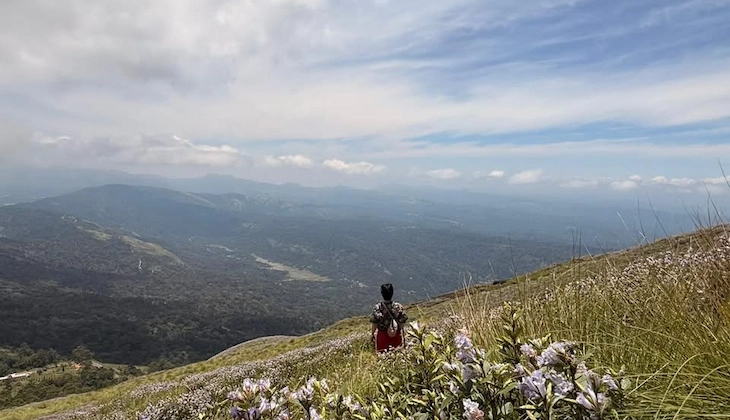
Why Chokramudi is one of Munnar’s most talked-about trekking destinations during the 2026 Neelakurinji season
Chokramudi Peak has long been one of the rewarding trekking destinations around Munnar, offering high-altitude grasslands, mountain landscapes and sweeping views across the Western Ghats. In 2026, however, Chokramudi has gained a new level of attention as its slopes have become one of the prominent locations for the seasonal blooming of the rare Neelakurinji flowers.
The flowering has brought a large increase in visitors to the Chokramudi hills. More than 4,000 visitors reportedly reached the area within five days after the Neelakurinji viewing area opened in August, with around 700 visitors arriving on Thiruvonam day alone.
For travellers planning to experience Chokramudi for the first time, the mountain offers a combination of trekking, panoramic views and, during the current season, the extraordinary sight of blue-violet flowers covering sections of the high-altitude landscape.
Where is Chokramudi Peak?
Chokramudi is located in the Devikulam Forest Range of Idukki district, around 18 km from Munnar. The peak rises to approximately 2,195 metres (7,200 feet) above sea level. Kerala Tourism describes Chokramudi as a high-altitude trekking destination where the landscape changes from tea plantations to shola forests and montane grasslands as you climb.
The mountain is also associated with the wider Western Ghats landscape and provides impressive views towards surrounding hills, valleys and reservoirs.
Why Chokramudi is special in 2026
The biggest attraction this year is undoubtedly Neelakurinji (Strobilanthes kunthiana).
The plant is famous for its unusual flowering cycle, with major flowering occurring approximately once every 12 years in particular populations. Importantly, different Neelakurinji populations in the Munnar region can follow different flowering cycles. The Chokramudi–Mattupetty population is flowering in 2026, while the better-known population around Eravikulam National Park follows a different cycle and is expected to have its next major flowering around 2030.
Reports from September indicate that the flowering around Chokramudi is attracting large numbers of tourists, with the hills taking on the characteristic blue-violet appearance associated with the flower.
Is Chokramudi suitable for beginners?
This needs a little clarification. The lower and initial sections of the Chokramudi trail can be manageable for beginners with reasonable fitness, but reaching the peak is not an easy walk.
Kerala Tourism currently classifies Chokramudi Peak as a difficult trek, noting that the trail becomes more challenging as it rises through steeper and uneven terrain. Its travel material also describes the initial stretch as suitable for beginners before the terrain becomes rockier higher up.
Therefore, first-time trekkers should not approach Chokramudi as a simple sightseeing walk.
What beginners should expect
The route generally takes you through changing landscapes:
Tea plantations → grassland slopes → rocky sections → higher mountain terrain → summit viewpoints
The terrain can become steep and slippery, particularly after rain. Mist and sudden weather changes are also common in the high ranges. If you are new to trekking, it is better to walk at a comfortable pace rather than attempting to reach the summit quickly.
Chokramudi trek during the Neelakurinji season
The 2026 flowering has created an additional attraction along the Chokramudi hills. The Kurinji Garden at Chokramudi was opened to visitors on August 24, 2026, with a dedicated entrance established near the Gap Road area. Visitors are permitted between 7 a.m. and 4 p.m.
Current published entry charges include:
₹200 – visitors above 18 years
₹100 – visitors aged 10–18
₹400 – foreign visitors
₹50 – still photography
₹100 – video photography
The exact arrangements can change, so visitors should check the latest Forest Department instructions before travelling.
Important: The Neelakurinji viewing area and the full peak trek should not automatically be considered the same experience. Visitors interested specifically in trekking to the summit should confirm the current trekking route, permit and guide arrangements before setting out.
Best time for the trek
For comfortable trekking, early morning is generally preferable. Starting early gives trekkers cooler conditions and a better chance of enjoying clear views before clouds build up.
During the current Neelakurinji season, September is particularly significant because the flowers have become a major attraction across Chokramudi and other highland areas. However, flowering intensity varies from one slope to another and weather conditions can affect the experience.
What to carry
If you are planning a Chokramudi trek, keep your backpack light but carry the essentials:
- Good trekking shoes with strong grip
- Drinking water
- Light snacks
- Rain jacket or poncho
- A light warm layer
- Cap and sunscreen
- Small first-aid kit
- Mobile phone and power bank
- Leech protection during wet conditions
- A small backpack for personal belongings
- Avoid carrying unnecessary plastic items.
Protect the Neelakurinji
The current flowering season is a rare opportunity, but it also places considerable pressure on the fragile high-altitude ecosystem.
Visitors should never pluck, uproot or trample the flowers. The Forest Department has warned that damaging Neelakurinji can result in a fine of up to ₹25,000 and imprisonment of up to three years. Drones are also prohibited in the area because of wildlife concerns.
The official Munnar Forest Division guidelines also advise visitors to remain on designated trails, avoid littering and carry valid permits or tickets.
The best photograph is one that leaves the flowers exactly as you found them.
Chokramudi and the future of Munnar trekking
The popularity of Chokramudi during the 2026 Neelakurinji season demonstrates how natural phenomena can create new interest in Munnar's lesser-known mountain landscapes.
While the flowers are currently attracting thousands of visitors, Chokramudi's appeal extends beyond the flowering season. Its tea plantations, shola ecosystems, grasslands, rocky ridges, mountain views and changing weather make it an important trekking destination in its own right.
For visitors who want to experience Munnar beyond conventional sightseeing, Chokramudi offers an opportunity to experience the highland landscape on foot.
And for those visiting during the 2026 Neelakurinji season, the combination of mountain trekking and the rare blue-violet flowering makes Chokramudi particularly significant.
Before you go: Trekking and flower-viewing arrangements can change according to weather, forest conditions and visitor-management requirements. Always check the latest instructions from the Kerala Forest Department before starting your journey.
0 Comments
Post Comment